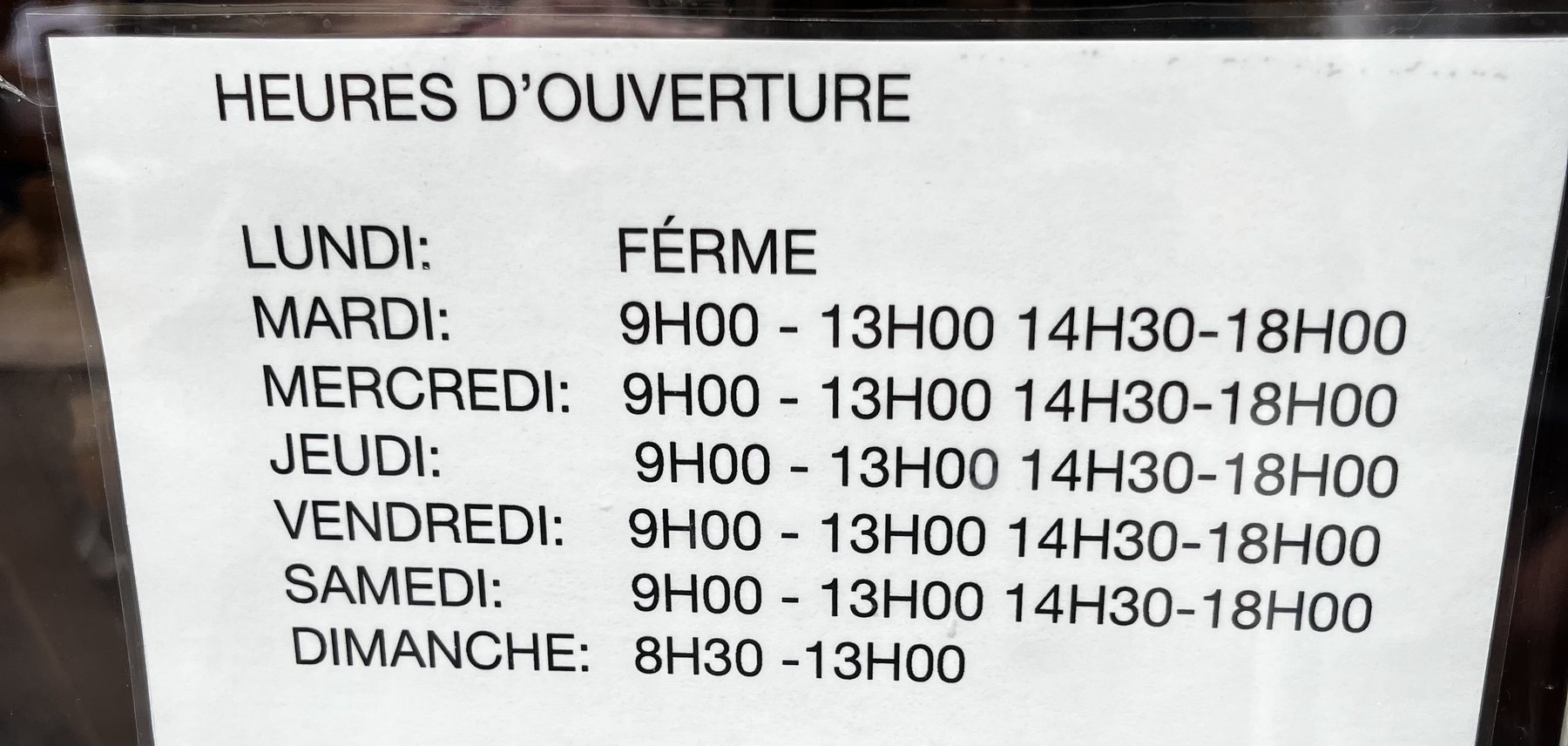
One of the first things that surprised me after moving to France was discovering that “closed for lunch” did not just apply to tiny village shops.
Entire furniture stores could apparently decide that my urgent need for a lamp would simply have to wait.
To be fair, when we first moved here we were still slightly in holiday mode. In holiday mode, a two-hour lunch closure feels charming. Once you actually live here and need to buy something before three o’clock, it becomes rather more educational.
The thing is, France is not doing opening hours wrong. It is simply doing them differently.
And in the villages and rural corners of France that I know best, life often moves at a gentler pace. I am quite sure Bordeaux, Toulouse and Paris have their own ideas about that, but here the rhythm can feel noticeably different — and, once you stop measuring it against the clock you arrived with, rather lovely.
Lunch means lunch
You quickly learn that 12 o’clock can be a dangerous time to begin any sort of shopping expedition.
Small shops may close for lunch, but what surprised me most at first was that even much larger stores could do the same. Furniture shops, specialist stores and all sorts of places that my British brain had assumed would simply remain open through the day could suddenly become inaccessible until mid-afternoon.
The practical lesson is simple: if you need something in rural France, check the opening hours before setting off. Especially if it is anywhere near lunchtime.
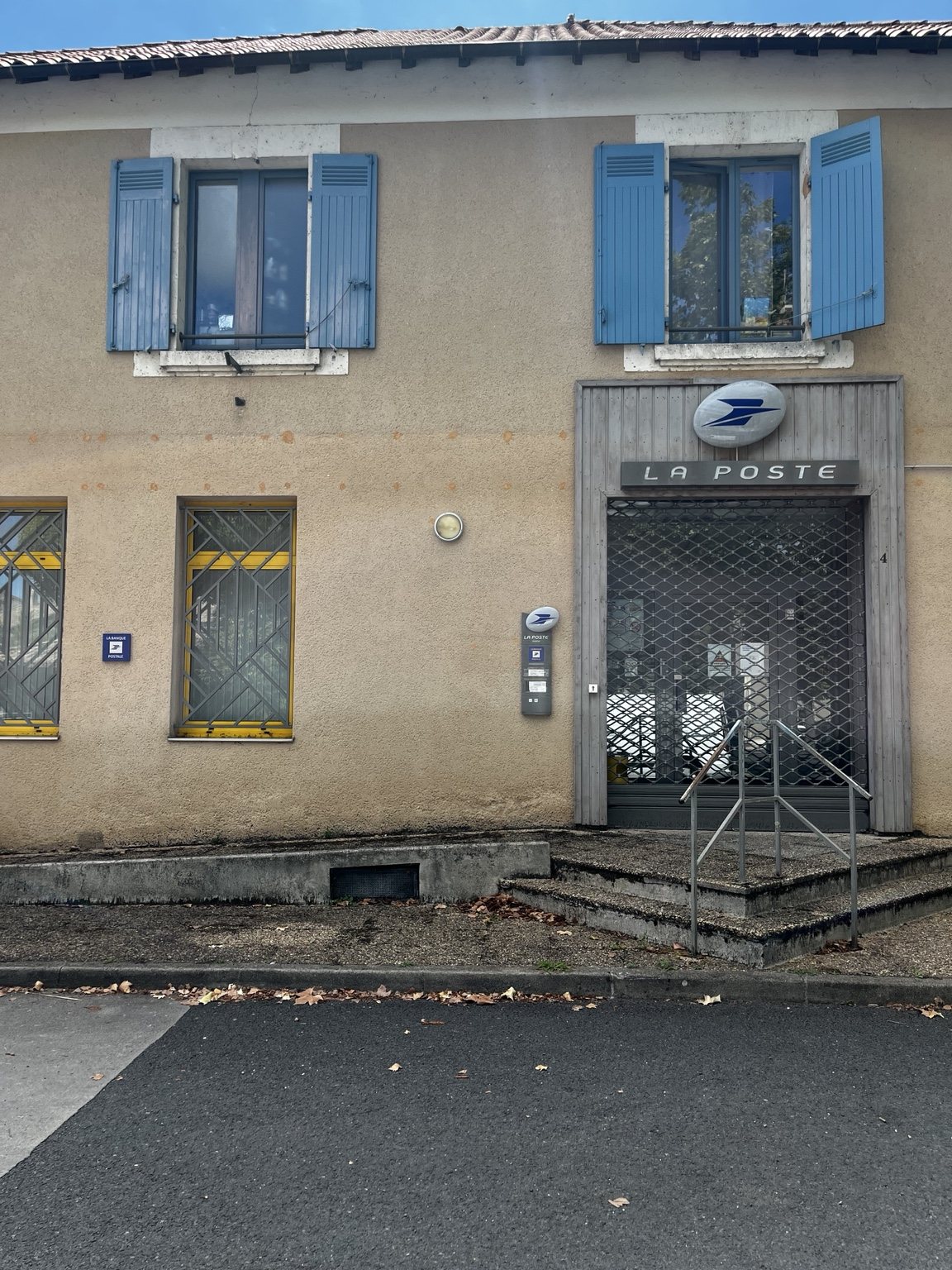
And then there is Monday
Sunday being Sunday is one thing. Monday can be another surprise entirely.
Around here, plenty of smaller shops, restaurants and independent businesses take Monday off, or open only for part of the day.
After a while you stop thinking, “Of course it will be open, it’s Monday,” and start thinking, “It’s Monday. I had better check.”
Sunday morning is your friend
Around here, many supermarkets are open on Sunday mornings and then close around lunchtime, while smaller shops may have even more limited Sunday hours.
So if your plan is to drift lazily into the supermarket at three o’clock on a Sunday afternoon, France may have other plans.
Sunday morning, however, can be the perfect moment to stock up, buy the bread and avoid the Monday problem altogether.
Restaurants operate on restaurant time
Restaurant opening hours are where optimism can become dangerous.
A restaurant may be open, but that does not necessarily mean the kitchen is still serving. Lunch service can finish earlier than a visitor expects, and dinner service may not begin when you would ideally like it to.
Only recently, we were sitting in a restaurant when a couple wandered in after the kitchen had closed and asked if they could eat. The answer was no: drinks were still being served, but food was finished for the day. Open, in other words, did not mean the kitchen was open.
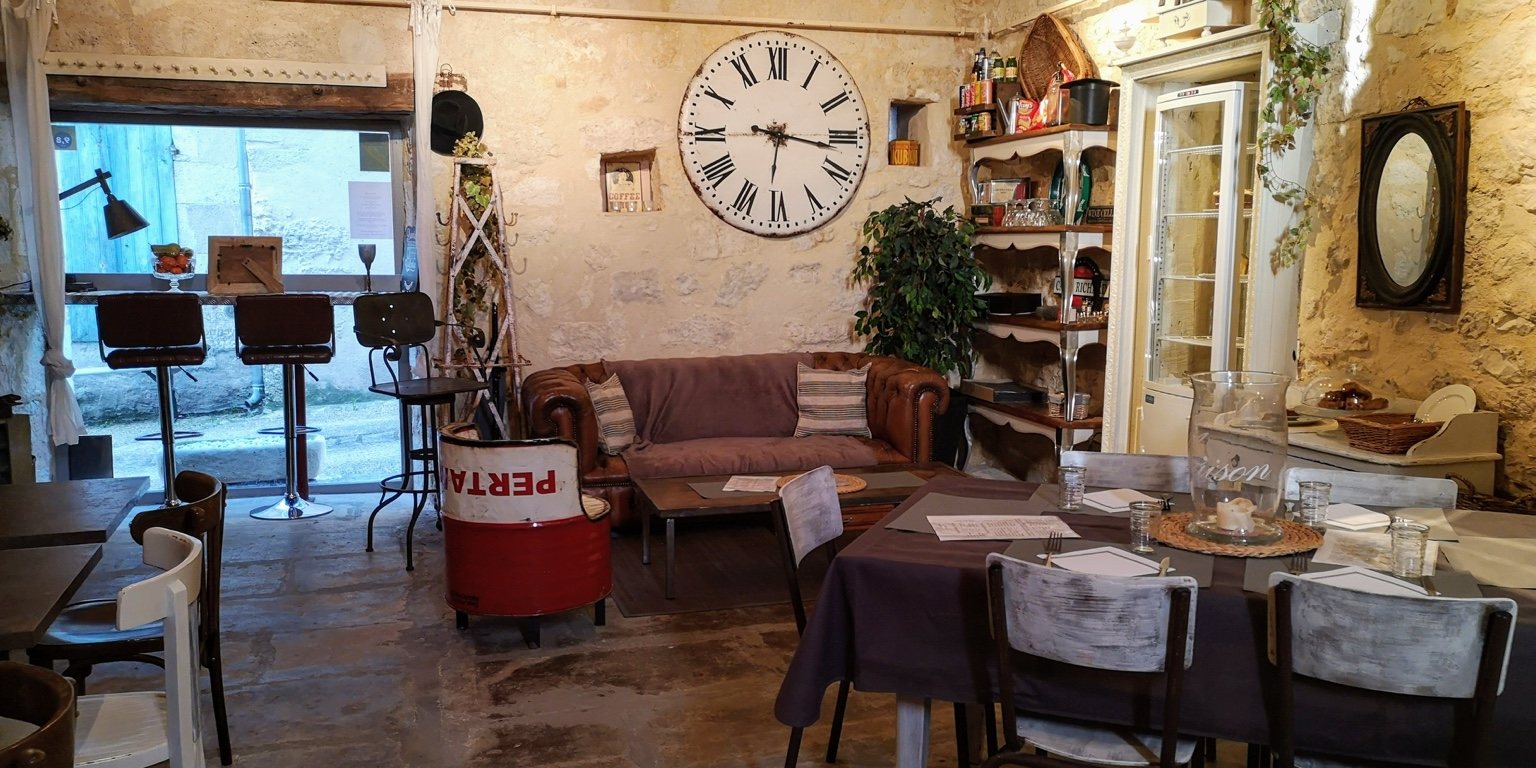
I learned this many years ago in Normandy, on a Sunday between Christmas and New Year.
The 1.32pm lesson
We had no plan. This was before smartphones, before asking a little glowing rectangle what was open nearby, and before having a sat-nav quietly judge your life choices.
At about 11am, Jac and I got into the car with the wonderfully optimistic idea that we would simply drive around rural Normandy until we found a nice little restaurant for lunch.
Easy, we thought.
Rural Normandy had other ideas.
We drove. And drove. And drove.
Eventually we found ourselves in Falaise, just before 1.30pm. By this point we were hungry enough to abandon any remaining standards and stopped at the first place that appeared to be serving food, a hotel restaurant.
It all looked promising. A waiter appeared, greeted us with a small smile, and Jac asked for a table for two.
“I’m sorry, sir, we stop serving at 1.30.”
Jac looked at his watch.
It was 1.32.
In as friendly a manner as he could muster, he pointed out that it was only 1.32.
The waiter smiled again.
“Yes sir. It is 1.32.”
And that was that.
Just up the road we spotted what looked like our final chance: La Fine Fourchette.
We went in. It was packed. The room looked as though it had been decorated by a colour-blind designer sometime in the 1970s: floral curtains, assorted colours and mismatched plates.
We asked if there was any chance of a table and gave the server our best desperate puppy-dog eyes.
“Of course. Come in.”
What followed became one of the meals we still talk about years later.
Not because of the décor. Not because the plates matched — they did not — but because the welcome was warm, the food was wonderful, there were little complimentary drinks, the largest three-tiered cheese trolley I think I have ever seen, and when the trou normand arrived a jug of Calvados was simply placed on the table with a cheerful “Servez-vous!”
The restaurant still exists today, although it has changed hands since our visit, so I would never pretend that someone going now would have exactly the same experience.
But that lunch taught me two things: French restaurant service times can be surprisingly firm, and there are also wonderful independent places where somebody decides that the rules can bend just enough to make your day.
Nowadays, I check restaurant serving hours before setting off.
Progress comes in many forms.
Bank holidays and the mysterious pont
Public holidays are another reason to check before you travel.
And then there is the very French art of faire le pont — making a “bridge” between a public holiday and the weekend by taking the intervening day off.
If a bank holiday falls close to a weekend, it is wise to check what is actually open rather than assuming business as usual.
August: manage your expectations
August deserves a special mention.
Paris may not literally empty and French administration does not actually disappear from the face of the earth, but in practice enough businesses, offices and services slow down, reduce hours or close for holidays that you soon learn not to leave anything urgent until the middle of August if you can possibly help it.
Out-of-office messages multiply. Appointments become scarcer. A perfectly straightforward task can suddenly become a September task.
The bank is not somewhere you “pop into”
Our local bank still works largely by appointment, apart from certain walk-in times.
And even if you go in believing you have one tiny, straightforward question, it is wise not to schedule anything immediately afterwards.
One question can become a discussion, a review of something else, several documents emerging from the printer, various signatures and, before you know it, the best part of an hour has passed.
The French bank is not somewhere you “pop into”. You enter with a purpose and emerge some time later having signed three things you did not know existed.
Google says open. France says maybe.
Online opening hours are useful, but they are not infallible.
Seasonal hours change. Holiday hours change. Independent businesses sometimes change their timetable without the internet receiving the memo.
So if you are driving any distance for something important, a quick phone call can still save a wasted journey.
The slower rhythm
There is a wider point hiding underneath all of this.
The cashier who takes a moment to chat to Madame Durand, the bank appointment that takes longer than expected, the restaurant that really does stop serving at 1.30 — these things are all part of a rhythm that can feel very different when you first arrive.
At first, you may find yourself trying to hurry it along.
Eventually, at least in the rural France I know, you begin to adapt. You check the hours. You book the table. You allow more time. You stop trying to launch an urgent administrative mission in the middle of August.
And somewhere along the way, you may even begin to appreciate the fact that Madame Durand gets her conversation.
The very short version
- Check opening hours before you set off.
- Check again if it is Monday.
- Check again if it is Sunday afternoon.
- Check again if there is a public holiday anywhere nearby.
- In August, check everything.
- For restaurants, check the actual service times, not just whether the building is open.
- For the bank, allow longer than you think you need.
And if someone tells you lunch service ended at 1.30 and your watch says 1.32, believe them.
France has not changed its timetable for me.
I have simply become much better at checking it.
And, if I am truthful, rather fond of the slower pace.
← Back to Lost in the French Aisle